
Cultural heritage places are locations that we value and that we have inherited from previous generations.
Cultural heritage places are important in Aotearoa New Zealand because they do the following:
- tell an important part of the human story of migration and human-environmental interactions.
- show local histories in which the descendants of early Polynesian voyagers became hapū and iwi of today and the local origins of Pākehā and tauiwi (non-Māori, immigrant) settlement.
- promote peace and intercultural understanding.
- foster recognition and reconciliation of past grievances.
- contribute to identity, a sense of belonging, and wellbeing.
- attract tourists.
- help to educate the next generations.
Don’t miss the critical conclusion at the end of the post!
Before coming to this page, I wonder what your answer would be to the question, why are cultural heritage places so important in Aotearoa New Zealand?
Perhaps you may immediately wonder what is a cultural heritage place? Mighty question that one.
Maybe you are thinking of all the places central to our national identity. I can see thought bubbles rising above your noggin showing the Waitangi Treaty Grounds, the Kerikeri Mission Station, or early Polynesian nohanga (settlements), such as Wairau Bar in Te Tau Ihu (Neslon-Marlborough).
Further still, you may have considered the shortness of our history and wondered whether much of interest has happened on these shores compared to the vastness of historical happenings in India, Mesoamerica, or Eastern Africa.
Whatever your perspective, you will come away from reading this post with seven key reasons why cultural heritage places in Aotearoa are so incredible and worthy of celebration, protection, reverence, and engagement.
The first stop in our understanding journey is Clarification Bay! Welcome aboard.

What is a cultural heritage place?
It seems like a bit of a dusty term that academics use. Let’s break it down.
Heritage can pretty much refer to anything that is of some value to you or others (individuals, communities, or society) that has been ‘handed down’ from a previous generation.
I like to think of heritage with the phrase taonga tuku iho. A taonga can be anything of value or interest to you. Tuku is to pass on or descend. Iho is from above or downwards.
Together, taonga tuku iho are those treasured things passed down to us from previous generations — A.K.A heritage!
I used the term things, but heritage or taonga tuku iho are more than objects. Heritage includes knowledge, practices, places, lands, natural resources, language and more. Just like taonga (see Te Tiriti o Waitangi!), heritage is very broad.
Today I am just referring to heritage associated with past people (cultural) that is place-based — whether it is a gold miner’s hut or a wāhi tapu associated with the taniwha of your hapū.
See below for an example of a cultural heritage place: Marutehiakina Whare Tupuna at Pūrekireki Marae, Pirongia, where I had a wānanga (workshop). The primary hapū of this Pūrekireki is Ngāti Taramatau (with connections to Ngāti Apakura) of Ngāti Hikairo, with further affiliations with Ngāti Maniapoto and Waikato.
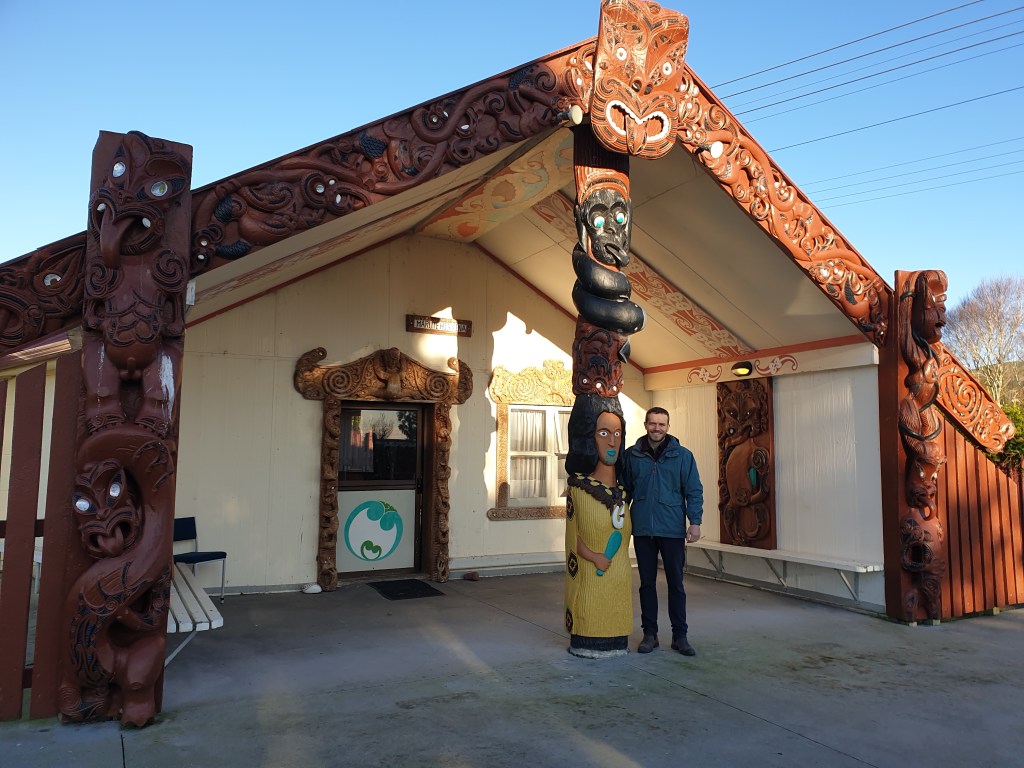
Taken together, a cultural heritage place is a location of some value to individuals or communities today that is associated with a previous generation. They are the locations binding the past before us in the present.
Archaeological sites are one form of cultural heritage place and have physical materials that you can study to learn more about the past (more on that here).
Okay, so why are they important? Keep reading and find out 😉
1. The book of humans
If you ask an archaeologist why archaeology in Aotearoa New Zealand is important, I would happily place a dollar or five on the likelihood that they would raise its contribution to the human story.
That human story is a migration story – a really long road trip! It is one version of our shared history based on research into archaeology, ancient DNA, linguistics and oral histories.
One of the early chapters details how certain groups of our species, Homo sapiens, left Africa about 100k years ago. Communities of people spread all over – from the Middle East, to Europe, across Asia to Australia and the Americas. It is quite an epic tale.
The last few chapters of migration
Within this metaphorical book, a significant section explains the incredible feats of Austronesian-speaking voyagers who traversed and populated the vast expanse of Oceania – the Pacific Ocean, Te Moana-nui-a-Kiwa.
From Southeast Asia over thousands of years, the voyagers successfully crossed formidable ocean gaps. Indeed, the high seas became the highways of the Pacific.
Some settled and became the ancestors of modern Indigenous Peoples in the Western Pacific. Others continued on the epic migration, following the practices of their ancestors.
Eventually, they arrived on the islands given the eclectic names of Aotearoa, Te Waipounamu, Rēkohu, Te Ika-a-Māui, Te Waka-a-Māui, Nu Tīreni, or New Zealand.
Sometimes the cultural heritage places may be investigated using archaeological techniques (under the mana/authority and tikanga/norms and protocols of tangata whenua). If you are interested in learning more about archaeology, check out this post.
The metaphorical footprint, the cultural heritage places, of the Polynesian voyagers whose descendants became the various whānau, hapū and iwi of today, are significant places. They are markers, physical reminders within the book of humanity.

Chapters on people and their environments
We know from whakapapa (genealogies) and archaeological evidence that Aotearoa New Zealand was settled in the second half of the thirteenth century. More on that another time.
Meanwhile, people have lived in other parts of this blue marble we call home for tens to hundreds of thousands of years!
Common questions that researchers are interested in are how do people interact with their environments? How does that interaction change through time? How did the environment change after people arrived and began managing that landscape? How did the changes in the environment then affect how and where people lived?
There was a fairly rapid change in the environment when Polynesian voyagers arrived in Aotearoa and their descendants settled the islands. These dynamics include areas of forest clearance, technological innovations in food storage, active management of local vegetation and cultivations, and animal extinctions.
The relatively short time period of settlement in Aotearoa makes it possible for environmental researchers to explore the above questions in ways that are not possible in areas that have been settled for much longer periods.
Through archaeology, cultural heritage places in Aotearoa are contributing to that broader human narrative of interacting with the environment through time.
Check out (video below) the recent excavations on sub-antarctic Enderby Island in the Auckland Islands group (Motumaha/Maungahuka). This is a current example of how cultural heritage sites are contributing to the human story. I was lucky enough to join!
2. Understanding our origins
Okay, recognising the overall human story is important and a worthy task. BUT, we do not have to define which cultural heritage places are important to our families and communities from what international circles have said might be important to humanity as a whole.
Although the Nazca Lines in Peru or the Imperial City in Beijing are internationally significant, often those places that are more significant to us are those closer to home – those places that contribute in some way to our local histories.

Mātauranga Māori, archaeology and written histories of and about cultural heritage places in Aotearoa contribute fundamentally to our local histories about who we are – here in Aotearoa specifically.
Examples of knowledge that have come from cultural heritage places include:
- change through time in material culture with regional differences (e.g., Dr. Christopher Jennings and Prof. Marshall Weisler‘ study on toki/adze adaptations in Murihiku/Southland).
- regional rock art connections and variations across Aotearoa (See Ngāi Tahu’s Te Karaka article).
- movement of objects and what that says about past mobility, trade and exchange networks (e.g., Prof. Thegn Ladefoged and others’ examination of obsidian artefacts in northern Aotearoa).
- how settlement patterns changed through time and how hapū and iwi formed (e.g., Dr. Caroline Phillips’ Waihou Journeys: The Archaeology of 400 Years of Maori Settlement).

- where and how early Pākehā settled, including whaler, sealing and timber stations, trading hubs and missions (e.g., Prof. Ian Smith’s Pākehā Settlements in a Māori World: New Zealand Archaeology 1769–1860).
- adaptation to new technologies, from the plough and mill, to nails and muskets, which changed the lifeways of Māori communities forever.
- British invasion and war, pastoralism, gold mining, flax milling – pick a point in history and there will be some form of cultural heritage place associated with it.
So much of our understanding of the past in Aotearoa comes from cultural heritage places. Much more than being essential chapters in the human story, the cultural heritage places in Aotearoa New Zealand are central to our local story.
3. Peace: tolerance and respect
Forgive me for a moment. I need to return to the global level again, and when I say global level, I mean… [pause for effect]… [cue trumpets]… The United Nations [cue image of gently waving national flags].
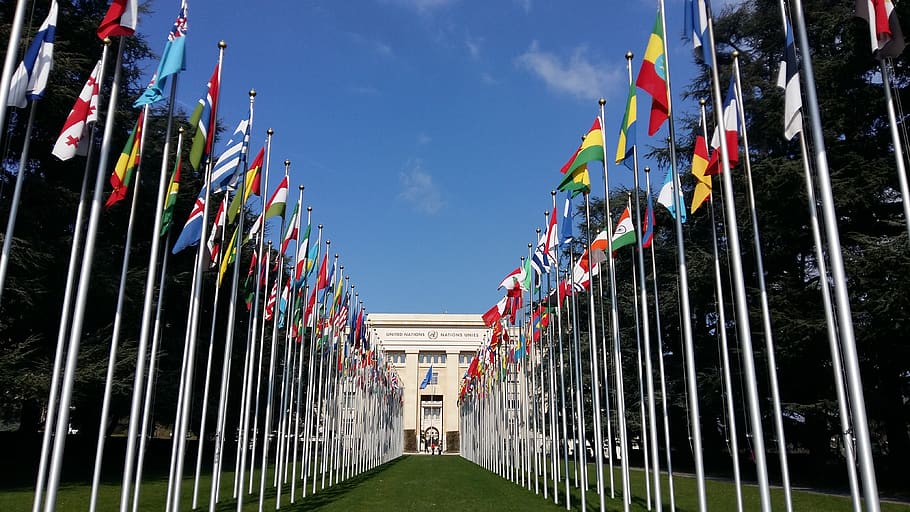
Let’s take it back 78 years to the great year of 1945 – the year that World War II was thankfully called off after years of slaughter and suffering.
The people of the world considered that earlier long-term peace attempts after WWI didn’t play out too well, so the United Nations established UNESCO [release the doves].
UNESCO is the United Nations Educational, Scientific and Cultural Organisation. It is an agency within the UN that maintains world peace and security through… well, sharing just that — education, science and culture.
The basic idea is that war and conflict come from differences in culture, opinion or perspectives. If we are all a little more understanding of where people are coming from, there will be less tension and less potential for a third world war. Touch wood! At the same time, I acknowledge the suffering and war that many parts of the world are facing this very minute.
Alright, Zac, but what does UNESCO have to do with our cultural heritage in Aotearoa New Zealand? Great question!
We do not have to go long in our day to be reminded of the strange tension in our lives. It may be a session on geopolitics on the radio or a moment of weakness leading us to a Facebook comment section.
Whatever the issue at hand, people are fence-sitting less. We are becoming more antagonistic and less forgiving of those who disagree with us on which way a toilet roll should go on its holder.
I think that we can remind ourselves of the original purpose of UNESCO’s recognition of the World Heritage Convention.
Through sharing, visiting, engaging, commemorating and protecting our cultural heritage places we will walk in the direction of greater harmony, while fostering diversity and the complexity of perspectives that come with a healthy, democratic society.

4. Recognition and reconciliation
It’s not all sunshine and daisies though. Although some cultural heritage places should be celebrated for their histories, others locate dark events that are equally essential to be remembered.
As the nation’s current cohort of students passes through the new history curriculum, they will be exposed to horrible narratives of colonialism, death, discrimination, and atrocity.
I am referring to the attack on and murders at the defenseless settlement of Rangiaowhia, Waikato, in 1864; the invasion of the pacifist settlement at Parihaka, Taranaki, in 1881; indeed, I refer to all the battle sites of the colonial British invasion of sovereign Māori land.
These scars on the history of this country may incite pain, anger, or discomfort. However, it is necessary for these histories to be acknowledged and remembered.
The cultural heritage places where these dark histories occurred become places that are returned to by the victims’ descendants, to reflect, to acknowledge.
They are also important locations where other New Zealanders should respect and sit with the discomfort. These cultural heritage places bring a special sensation that only comes with being in the space where dark events played out (e.g., Dr. Liana MacDonald and Prof. Joanna Kidman’s work on teaching at places of colonial violence).
It is through these embodied sensations of historical wrong that we are driven, perhaps in spite of our personal interests, to reconcile those wrongs as a country. At the very very least, cultural heritage places help us to recognise that those events REALLY occurred at a REAL place and have caused REAL inter-generational trauma.
An example of the power of cultural heritage places in the process of recognition and reconciliation is the beginning of Te Pūtake o te Riri: He Rā Maumahara (the commemoration day of the wars between the Crown and Māori):
5. Wellbeing and identity
It feels good to know who you are and where you are from.
We can be reminded of our identity through spending time with family and friends, listening to music recordings of what we were raised on as kids, or returning to important places passed on to us by our forebears.
These places may be your Dad’s marae, your town’s war memorial with your great-grandfather’s name inscribed, or perhaps your hapū’s ancestral pā.
There are significant personal and communal well-being benefits from having a strong relationship to cultural heritage places.
So what does having a strong connection look like?
Well, it could be by visiting them regularly, performing ceremonies there or researching more about them.
Without these connections, wellbeing can be negatively affected as has been experienced by the effects of colonisation, land alienation, destruction of heritage sites or inappropriate use of these sites. That being said, there is always potential for the building up of that wellbeing through reconnection.
Cultural heritage places are so important as places to connect to our ancestors and reinforce our sense of self.

6. Cultural tourism
Another reason why cultural heritage is important is because of its tourism potential.
Tourism is a massive industry for Aotearoa New Zealand, contributing to over 20% of national exports and $16.4 billion in the year ending 2019 (admittedly before Covid).
Visiting the cultural heritage places on offer is one draw card for tourists. Not just to the country, but to the regions.
Tourist destinations are sometimes nationally showcased and funded by the New Zealand Government. The Tohu Whenua programme is one such example and is a visitor program intended to connect Kiwis to their heritage, increase national identities and enhance wellbeing.
Due to the tourism potential, cultural heritage places are an economic development opportunity for Indigenous or non-Indigenous communities — and not only for economic gain.
Many ventures may be entirely non-profit. Instead, they are places where history and culture are shared for all while resourcing conservation, protection, and revitalisation efforts.
Amazing examples of cultural heritage place tourism are Te Ana Māori Rock Art Centre of Ngāi Tahu and Thames’ Goldmine Experience.
7. Place-based education
Cultural heritage places are also places for education. As the country grapples with teaching the new history curriculum to the next generation of citizens, it is so important to incorporate cultural heritage places within those programmes.
Education physically in a location where events occurred is a powerful way of teaching. It instils the significance of cultural heritage places within the student, which builds personal identity and enables students to explore new relationships with places already familiar to them.
If you are wondering why Aotearoa New Zealand cultural heritage sites should be taught in schools, I will kindly ask you to re-read this post.
Check out Prof. Wally Penetitio’s (Ngāti Hauā) insights on place-based education:
Important conclusion #readthis
Cultural heritage sites are extremely important in Aotearoa New Zealand. They provide a human-level and local history perspective, bring peace and understanding, enable recognition and potential reconciliation of dark histories, inspire a positive sense of wellbeing, and are potential locations of tourism and education.
So why is it so essential for you to know they are important?
Because they need to be protected, learnt about, respected and celebrated. They deserve formal recognition and to be defended from our growing developments. They are worthy of well-resourced kaitiaki, archaeologists and heritage practitioners to care for, understand and share them.
Archaeological sites, particularly, are finite and ultimately gone forever if destroyed. Unlike a tree that is cut down, you cannot plant more archaeological material (in situ and of the same age!). Once they go, they will go forever; not only for us, but for all of our unborn descendants.
Okay, okay, point made.
Thank you for reading this post! If you like what you have read and would like to see more of this content, please let me know, like, subscribe and share!
Zac
 The Past Before Us
Wow, this blog post perfectly captures the essence of cultural heritage places in Aotearoa New Zealand! I couldn’t agree more with the 7 reasons highlighted. They truly are invaluable treasures that connect us to our roots and shape our identity. Fantastic read!
Have A Great Day Ahead – Melissa
Free Keto Diet Recipes – http://www.ketodietrecipes.co.uk
LikeLike
I just stumbled upon this amazing blog post discussing the importance of cultural heritage places in Aotearoa, New Zealand. It highlights seven reasons why these places are incredibly significant, emphasizing their role in preserving the country’s unique history, fostering a sense of identity, and promoting tourism.
Regard Mel
Over 50 Delicious Keto Recipes – http://www.ketodietrecipes.co.uk
LikeLike