Middens are the most commonly recorded “archaeological site” in the Aotearoa New Zealand and one of the most frequently recorded archaeological features. They are important because they are physical connections to the past that promote a sense of connection and belonging, and a long term perspective on this country’s history. Through archaeology alongside Mātauranga Māori we can learn much about the past from midden.
People always ask heritage professionals and archaeologists working in Aotearoa New Zealand, have you been to work overseas YET?
I am sure Nigel over the fence was innocently inquiring about my career prospects to pass the awkward silence of our poorly timed Monday morning roadside rubbish bin dropoff.
But, it is a common question that I can’t shake from my mind as it implies an inevitability of moving to greener pastures, possibly suggesting that this country’s heritage and archaeology is uninteresting or unimportant (so why wouldn’t I move away?).
Well, thanks imaginary neighbour, Nige, for some blog inspiration.
Before I go on, check out my post on 7 reasons why cultural heritage places are so important in Aotearoa New Zealand, for more on that point.
Today, I want to focus on one key element of archaeology in Aotearoa: the humble “midden”. There are over 22,000 archaeological “site” records on the national archaeological site database, ArchSite, referring to a midden feature (among other features). That makes it one of if not the most commonly recorded archaeological feature in the country.
Part of the midden’s ubiquity adds to the common suggestion that archaeology in Aotearoa New Zealand is boring (so when will you work in Egypt?).
Today, we will explore the value of the humble midden and perhaps provoke some wonder about what we can learn from archaeology in Aotearoa New Zealand as a whole.
Vamos, Nigel, let’s go!
Shell midden — what are they?
The Merriam-Webster Dictionary etymology of the English word midden goes back to the fourteenth-century Old Norse word mykdyngia, literally meaning dung heap.
The modern spelling seems to have appeared in the early nineteenth century.
The messy connotation of midden is beautifully captured in the following metaphor in Practical Parenting (1989): “I’m still in my nightie at midday, the house is a midden, and I don’t even go out to work” (Oxford English Dictionary).
Archaeologists worldwide have used the term to describe archaeological piles and deposits of material interpreted as rubbish or waste.
In Aotearoa New Zealand, the term midden generally refers to deposits of shell that often include bone, stone artefacts, seeds, red ochre and charcoal. Today I will be focussing on midden made by Māori — tangata whenua.
Kia hiwa rā! Warning! There is an implication that these tangata whenua archaeological features were always just waste piles.
That is not necessarily always the case, which opens us up to a debate about using the term midden (a waste pile) in archaeology to describe a feature that may not have had that purpose at any point. Let’s not go there for now.
What do middens look like?
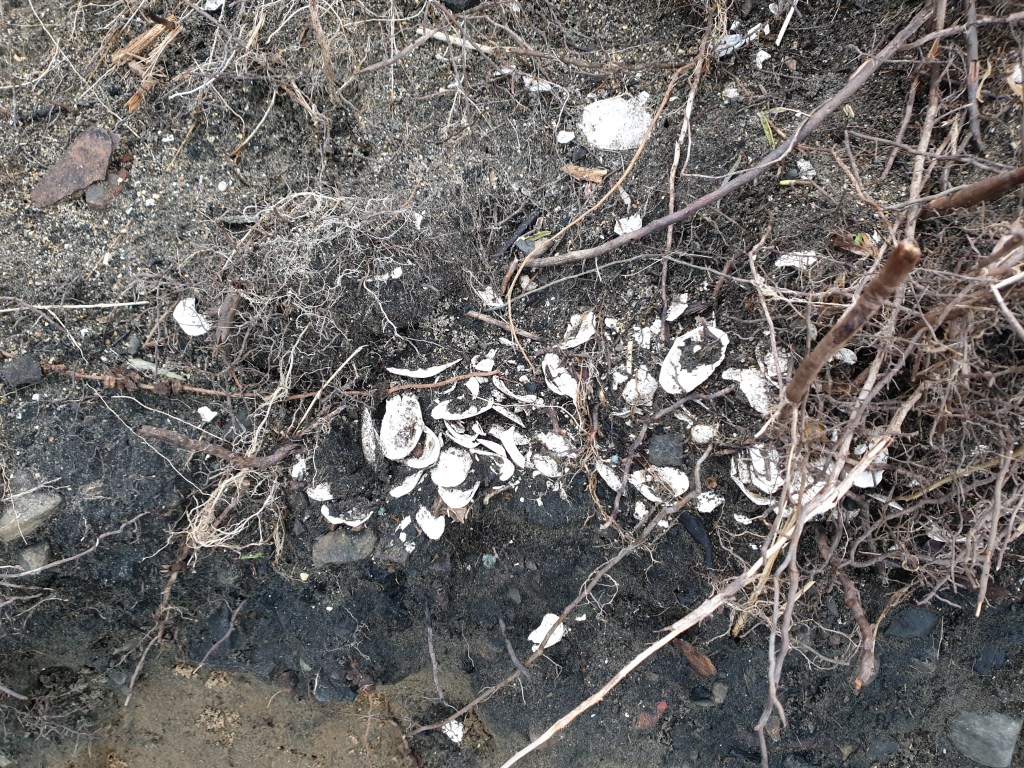
Landowners and people curious about why I strangely inspect eroded dunes challenge me when I declare a shell lens as an archaeological midden deposit – a physical remnant from a historical tangata whenua occupation in the area.
Fair enough! How do I know a midden from a natural shell lens? Sometimes I get confused too, but I have a few secret squirrel rules of thumb that I will share with you. Midden can have the following components:
- Middens can appear as buried deposits but were often originally mounds or piles.
- Several shellfish species from different habitats suggest people have gathered and deposited them there.
- Other materials, in addition to shells, including bird, mammal and fish bone, stone artefacts (taonga kōhatu), charcoal, wood, kōkōwai (red ochre), ash, and rocks from fires and earth ovens (hāngi or umu).
- Charcoal-stained sediment around the shells.
- The shells, rocks, and bone may be burnt or have discolouration indicating they have been cooked.
- Shell midden often but not always include variably fragmented shells.
- Shells have been opened (particularly bi-valves like pipi and kūtai/green-lipped marine mussels). Lots of closed bi-valves are typical in natural shellfish beds.
Middens vary size and appearance. They can be a 1 cm thick scattered deposit of buried shell or form an enormous mound the size of your house.
They can form from one single event of deposited waste from an afternoon feed or be built up over weeks, years or generations and have multiple layers.
Where are they located?
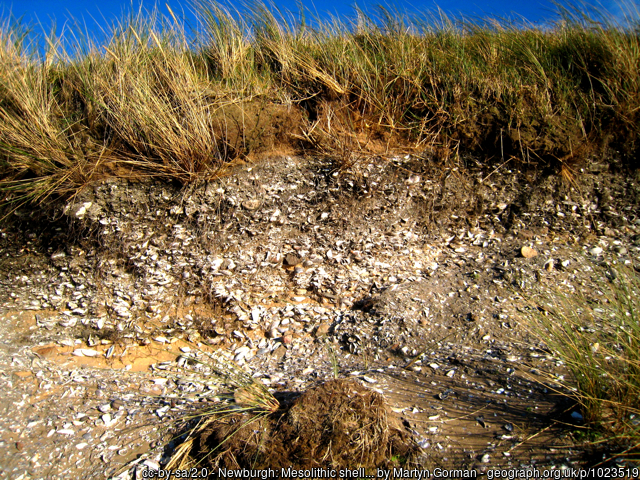
Generally speaking, you can find shell midden near the areas where their contents were collected. In this way, middens are more common along coastlines and waterways than inland. If a local tuangi (cockle) bed exists, historical midden will probably be buried in the dunes and hills nearby.
That being said, many midden have been uncovered a long way away from the coast. What do you think that might indicate? Hold that thought.
Why are middens important?
Like all archaeological evidence, middens are tapuwae o ngā tūpuna — sacred ancestral footprints. They are physical remains of former occupations by tanga whenua in your particular place.
Middens remind us (if needed) of the deep history of where we live and can be a meaningful physical connection of descendants (ngā kanohi ora) to those ancestors. The value of these places to tangata whenua must be defined by tangata whenua – like all communities, iwi, hapū, whānau, and individuals have different perspectives.
Through archaeological practice, we can learn much about past environments and historical activities by tangata whenua of an area. As always, such archaeological work should be done in collaboration or leadership of tangata whenua.
Shells often preserve well compared to other organic remains and are clearly visible when eroding from a dune bank. Therefore, midden can be a helpful indicator of other buried and more ephemeral archaeological evidence in the surrounding area.
Middens are the tip of the archaeological iceberg!
What can we learn from middens?
What was collected (and eaten)?
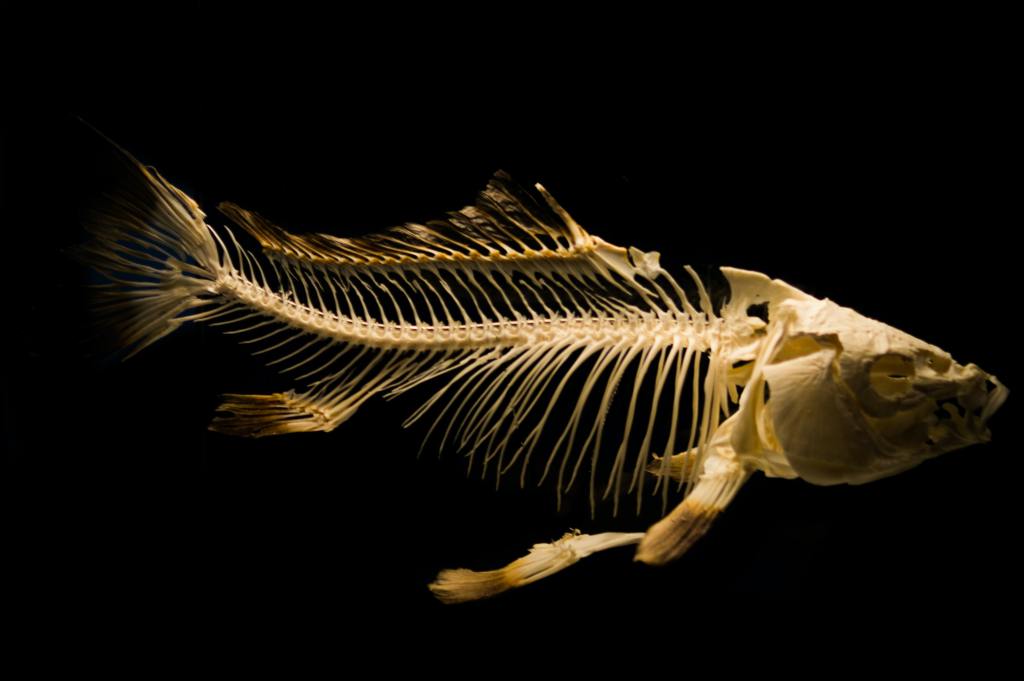
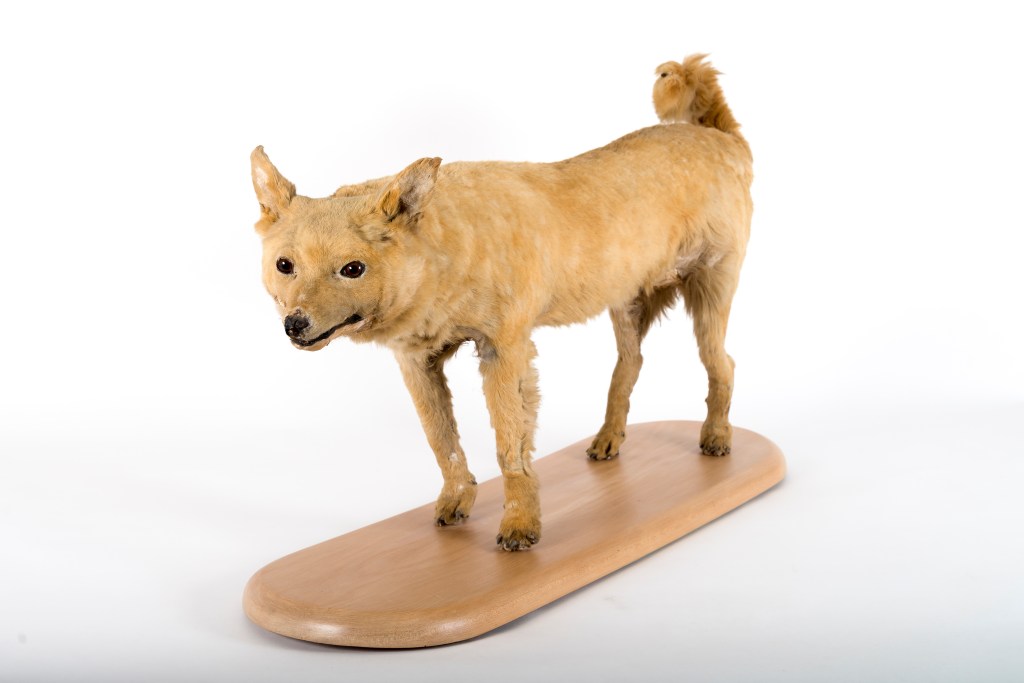
The most obvious thing we can learn from a midden is what people ate based on the remains of that kai. This evidence could include the shells of pipi, tuatua, kūtai (green-lipped mussels), kākahi (fresh-water mussels), or pāua, or the bones of kererū, hoihō (yellow-eyed penguin), kurī (dog) and tāmure (snapper).
A lucky (or unlucky!) archaeologist may also come across what those animals ate — usually kurī.
Yes, that’s right, fossilised poop (coprolites) is often preserved in archaeological deposits. They always bring a giggle and snide remark. Shouldn’t have had those chillis, mate 💩
Mature specialists can analyse the contents of those poops to understand what the kurī, for example, may have eaten. This information contributes to our understanding of relationships between people, dogs, and local environments.
When was the midden made?
Based on what shells and bones there are, you can begin to think about broader questions and bring in your knowledge of māramataka (Māori lunar calendar) and broader mātauranga Māori (knowledge).
Say there is kererū bone in a midden; you can sketch a picture of when the midden was created based on summer or autumn harvest times (depending on the region). Perhaps other types of shellfish and bone also indicate summer activity.
Aside from the season, you can use radiocarbon dating to explore when it was made in calendar years. Put simply, radiocarbon dating tells us approximately how long ago an organism (living thing) died based on the amount of different types of carbon within its physical remains (check out the vid for more info below).
Those physical remains are usually wood, charcoal, bone, shell and seeds. Many complex issues complicate dating, like whether you find the person funny, if lifestyles match up and whether you’re attracted to them… Oh yea, there are many factors to radiocarbon dating too. 🤣
You must be very careful to date the historical event you think you are, what material it is, whether the material has been disturbed or contaminated, whether you are dating the most recent part of the organism, and so on.
Once you tumble over those hurdles, you get a date in calendar years of when that organism died, i.e., when it was harvested or chopped down (but even that is not a given!).
Where were the midden materials collected from?
We can make simple hypotheses about where particular shellfish and shellfish were harvested from based on where their local habitats are.
Remember I asked you to hold that thought about what inland midden can tell you? Fish it back, please. On one level, marine shellfish remains found inland tell us that kai moana was brought from the coast.
But why did people bring it all the way inland? Perhaps the food was brought as koha (gifts) for a hākari by a guest hapū where they were hosted by tangata whenua tuna (eels) or kūmara. Or, maybe it was part of the seasonal movement of communities between different settlements within the same rohe (tribal territories).
Archaeology cannot necessarily answer these questions. Instead, I believe this is one space of many that Mātauranga Māori and kōrero (oral histories) about migrations, intermarriage, rohe and hapū formations, and general manaakitanga (hosting values) contribute knowledge about that past where archaeology cannot.
Aside from knowing the local habitat of the plant or animal remains you are looking at, archaeologists can also look at chemical signatures of bone, shell and stone.
We can determine where the stone source was based on its geochemistry or explore the whakapapa or history of the object itself. Many stone artefacts, for example, show evidence of having been used for many different things, including hammer stones, scraping tools, cores, toki, ornaments or heating stones.
From bone, we can identify the type of animal that it was and explore questions of where the animal lived based on the chemical isotope signatures. For instance, recent research has explored where kurī lived before their bones were deposited in Māngere.
What sizes of animals and plants were chosen?
When archaeologists systematically sample middens, we can explore whether specific sizes of animals and plants were harvested. Sometimes that may be an element of managing the environment (i.e., kaitiakitanga), and sometimes that may result in only specific sizes of animals and plants being available to harvest.
For example, a common question is whether there has been a change in the sizes of shellfish harvested from an area through time. I grew up fishing tāmure with my dad and brothers in the Hauraki Gulf. Within my memory, I have noticed a change in the size and density of tāmure that have latched onto my hook.
Looking at midden, we can explore these questions of changes in fish stock. There are many biases and problems with doing this, but archaeological features – ngā taonga tuku iho, ngā wāhi tupuna rānei – provide an essential source of information for kaitiaki katoa (all stewards) seeking to understand past environments and how they have changed (this was done in a recent study in Northern New Zealand).

And so much more!
Other things we can learn from middens include the following:
- Micro-fossil evidence in the sediments can tell us what plants may have been growing in the surrounding area when the midden was made – e.g., whether there was a primary forest or a kūmara cultivation.
- The types of charcoal present can tell us about whether specific species of timber were chosen or what was available locally.
- Material culture, including carved objects, tools and ornaments, can be analysed for their commonalities and differences regionally and through time.
- Evidence of animals now extinct in an area, such as moa or seals.
Does every midden matter?
On the one level, midden are wāhi tupuna. They are physical manifestations of whakapapa, providing a tangible link to historical connections between tāngata (people) and whenua (land). On this level, only those whānau, hapū and iwi can attest to those places’ significance.
On another closely related level, middens are repositories of rich information. Through archaeology, we can explore the timing and nature of historical occupations in the area; what was harvested and when; whether there was change through time in harvesting and environmental management; and how far people travelled to collect those resources.
From these simple morsels of information, we can explore why the midden was deposited there, whether it was associated with an important feast and the offerings of a visiting hapū perhaps.
We can also consider the broader array of objects and materials that would have been used to collect, process, use and deposit the materials. If there are kererū bones, consider what is not there but would have been there. The bird spears or snares, the kete, the time of year they were harvested, the karakia uttered, and the setting aside of the first birds for the tōhunga.
We cannot necessarily test whether these actions occurred using archaeology. However, Mātauranga Māori – knowledge about how people engage with their environments and the values behind that engagement is invaluable to exploring this in the past.
Middens are protected places. It is illegal to fossick, modify or destroy midden (and all archaeological “sites”). However, they can be recognised, reflected on and inspected visually. As always, respect those who have gone before and those living descendants who have mana in your area.
Thank you for reading this post. What do you think of when seeing midden? Do you connect with them in ways that I haven’t spoken about? Leave me a comment below or flick me an email e hoa mā. Mauriora.
Zac
 The Past Before Us
2 thoughts on “What is the most common “archaeological site” in Aotearoa, and why are they valued?”